
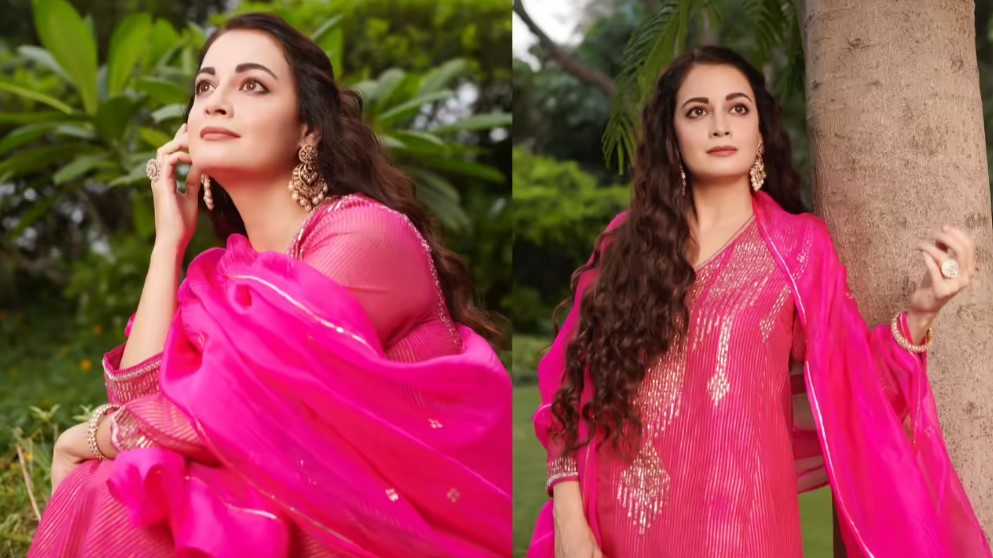
When Dia Mirza steps out in public, it is never “just fashion.” It is a statement. This week, her rani-pink ethnic look made headlines — not only for its beauty but also for its deeper message. In a world dominated by fast fashion, celebrity endorsements of sustainable, indigenous fabrics can be game-changing. What Dia wore was not simply an outfit; it was a cultural and ecological narrative draped in silk.
What She Wore — A Textile Story
Dia’s look came from Tilla by Aratrik Dev Varman, a label known for weaving heritage into contemporary silhouettes. Her ensemble featured:
- Handwoven silk organza with delicate texture and sheen.
- Block-printed vertical stripes that gave structure without overwhelming the fabric.
- A yoke design inspired by Islamic architecture, carrying motifs that link India’s past with its present.
- Pitta work embroidery, an intricate craft technique that added depth without excess.
- Paired flared pants for a modern silhouette.
- A sheer organza dupatta dotted with handwoven buttis.
- Styled minimally with statement chandbalis, allowing the textile and craft to shine.
It was an outfit where design didn’t scream for attention; it whispered sophistication — and in doing so, it let the fabric tell its story.
Why This Look Goes Beyond Fashion
For most celebrities, wearing handloom is an occasional PR stunt. But Dia Mirza is different. She has long been known as Bollywood’s “conscious queen”. As a United Nations Environment Programme Goodwill Ambassador, her advocacy for climate action and sustainable lifestyles carries weight. When she chooses handwoven fabrics over synthetic, mass-produced garments, she amplifies the work of farmers, dyers, spinners, and weavers — the invisible hands behind India’s textile heritage.
One celebrity appearance in a handloom piece might seem small, but it creates ripples. Fashion is aspirational. When someone of Dia’s stature treats handloom as glamorous, millions of people start looking at it differently — not as a relic of the past, but as the fabric of the future.
Handloom’s Climate Logic
Handloom weaving has always been climate-smart, even before sustainability became a buzzword.
- Low-energy weaving: Handloom does not depend on fossil-fueled machinery. A weaver’s skill and physical labor drive the loom, making the carbon footprint far smaller than powerloom equivalents.
- Localized production: Handloom is often spun, dyed, and woven within a region, cutting transport emissions drastically compared to global fast-fashion supply chains.
- Challenges remain: Dyeing and finishing processes in some clusters still use electricity, wood, and chemical dyes. Studies highlight these as the main areas to improve. Yet even with these factors, handloom’s footprint remains considerably lighter than mass-produced textiles.
- Regenerative potential: By moving towards natural dyes, solar-powered dye houses, and cleaner post-processing, the sector can become a true global leader in sustainable textiles.
The Social Equation
The handloom sector is one of India’s largest rural employers after agriculture. It sustains:
- Over 35 lakh workers
- More than 31 lakh households
- Around 72% women artisans
This is not “hobby weaving.” It is survival, dignity, and legacy for millions of families. Each sari or kurta bought from a handloom cluster pays for a child’s education, a weaver’s medical expenses, or an artisan’s food security. When Dia Mirza makes handloom aspirational, she indirectly increases demand — and demand means livelihoods are protected.
How One Outfit Creates Ripples
The media this week didn’t just describe Dia’s attire; they highlighted its sustainable value. Headlines read “Elegance Meets Sustainability” and “Modern Begum in Handloom.” This is critical. Instead of being framed as “old-fashioned,” handloom is now entering the language of modern luxury.
That shift changes consumer psychology. People buy not only because it looks good but because it makes them feel part of something bigger — cultural pride, ecological responsibility, and social empowerment.
A Responsible Consumer’s Checklist
If you want to follow Dia Mirza’s lead and embrace handloom consciously, here’s how:
- Ask for the story, not just the style. Know what fiber it is (silk, cotton, linen), where it was woven, and how.
- Look for craft details. If embroidery, block printing, or dyeing is mentioned, confirm whether it is hand-done or machine-replicated.
- Check the dye process. Natural or azo-free dyes and effluent treatment systems reduce water and soil harm.
- Traceability matters. A good brand can show you the journey from yarn to fabric.
- Buy less, buy better. A handloom sari or kurta can last decades if cared for, unlike disposable fast fashion.
What Brands and Policymakers Must Do
- Cleaner clusters: Introduce renewable energy and eco-friendly dyeing in weaver clusters to reduce environmental impact.
- Transparency in wages and credits: Every product should name its weaver, technique, and ensure fair compensation.
- Invest in traceability tech: Digital Product Passports and blockchain can help record and authenticate each product’s journey.
- Continuous storytelling: Handloom deserves year-round promotion, not just on National Handloom Day.
The Cultural Power of Pink
The choice of rani-pink was deliberate and powerful. This shade is festive, bold, and unapologetically Indian. On handwoven organza, with motifs drawn from heritage architecture, it becomes a metaphor: India can be modern and global while still rooted in its own traditions. That is what sustainability in fashion truly means — continuity without compromise.
Final Thought
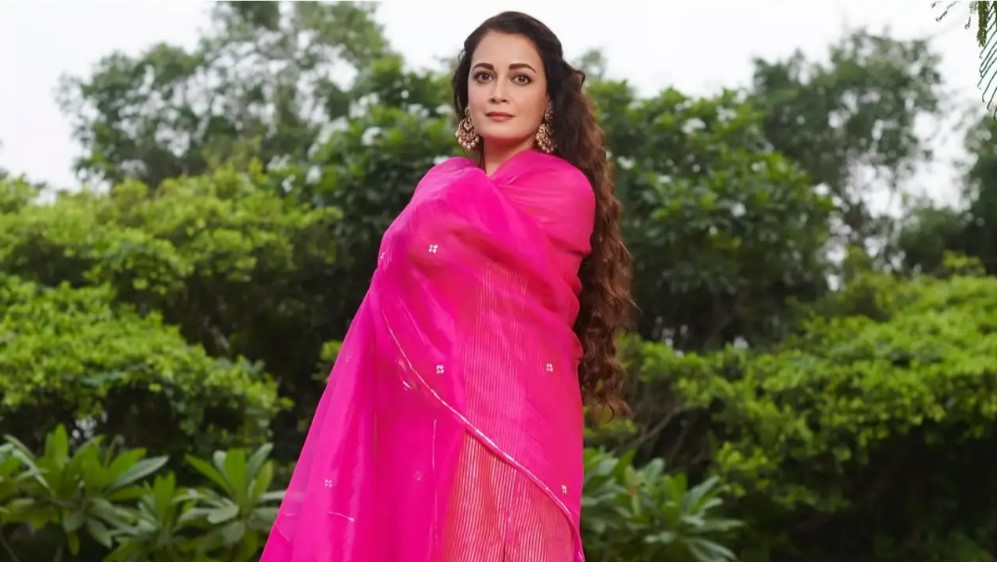
Dia Mirza’s look this week wasn’t just fashion; it was advocacy wrapped in silk. She reminded us that handloom isn’t charity, nostalgia, or a passing trend. It is a living industry, a climate solution, and a cultural superpower.
If you’re a consumer, start asking better questions. If you’re a brand, start providing honest answers. And if you’re a policymaker, recognize that handloom is not India’s past — it is India’s future.
Style with substance — that’s the real revolution.
— Save Handloom Foundation