
November 1, 2025 — Kerala Formation Day.
And along with the fireworks came a grand declaration from the state government:
“Kerala has become India’s first poverty-free state.”
Sounds glorious, doesn’t it?
But before we pat ourselves on the back, let’s ask the question that really matters — is Kerala truly poverty-free, or just data-free?
The Government’s Grand Claim
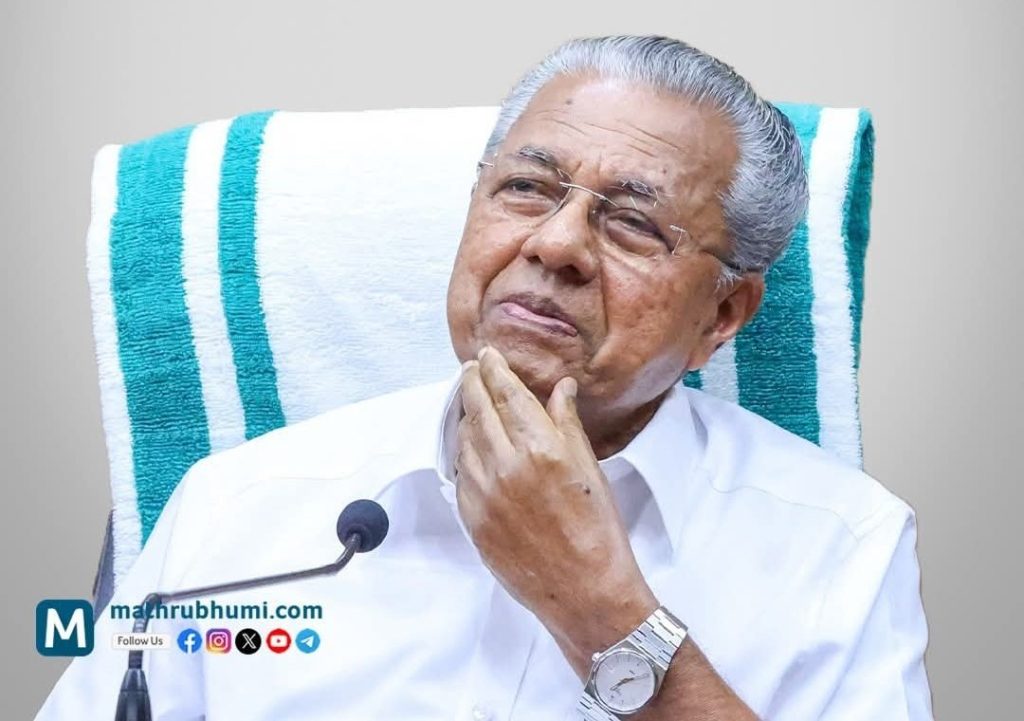
Chief Minister Pinarayi Vijayan announced that not a single person in Kerala now lives below the poverty line. The claim was made under the Extreme Poverty Eradication Project (EPEP), started in 2021, where local bodies, Kudumbashree workers, and ASHA volunteers identified around 64,000 families as “extremely poor.”
The government says each family was given a micro-plan — a custom solution involving housing, food security, health care, education, or employment.
According to the official statement, by October 2025, every one of those families has been lifted out of extreme poverty.
If that’s true, it’s historic. But the question is — who verified it?
What the Ruling Party Says
The CPI(M) government is calling this a model for India — a state that has defeated poverty through strong local governance and people’s participation.
They claim that technology and door-to-door surveys helped track every poor household, and that Kerala is now aligned with the UN Sustainable Development Goals — especially SDG-1 (No Poverty) and SDG-2 (Zero Hunger).
They even claim Kerala could be among the first in the world to achieve this milestone.
But let’s pause here.
What the Opposition Says
The Congress-led UDF says the government’s claim is a statistical fraud — that the survey methods are not transparent, and the announcement was politically timed.
The BJP says it’s the central government schemes like PM Awas Yojana, Ayushman Bharat, free food grains, and rural employment that actually helped poor households, not the state government alone.
Both sides are asking the same thing — where’s the proof?
The Reality Behind the Rhetoric
Even as the government celebrates, Kerala’s ASHA workers — the very people who helped conduct these surveys — have been protesting for months, demanding proper wages and timely payments. Many earn barely ₹7,000–₹8,000 a month, which comes late, with no job security or pension.
If the people delivering healthcare and collecting poverty data are themselves struggling to survive, are we sure “no poverty” applies to them too?
Then there’s the question of the tribal population — especially in Attappady, Wayanad, and Idukki.
Remember Madhu, the tribal man who was lynched in 2018 for stealing food because he was hungry?
Kerala’s “poverty-free” claim must answer one haunting question — are there no more Madhus left in our hills?
Because on paper, Kerala might be shining.
But on the ground, hunger still hides behind hills and walls.
Technology or Paperwork?
The government says it used a combination of digital dashboards, mobile data collection, and Kudumbashree field visits to identify and assist poor families.
That’s good — if done honestly.
But unless this data is published, verified, and audited, it’s just numbers in a PowerPoint presentation.
If the government wants the world to believe this miracle, it must open the data for public review — show how each family was supported, and what proof exists that their income, health, and living standards have permanently improved.
The Numbers That Don’t Add Up
According to national records, Kerala still has around 5.9 lakh families under Antyodaya (AAY) ration cards — these are officially classified as the poorest of the poor.
So how did only 64,000 families make it to the “extreme poverty” list?
Where did the others go?
Are they invisible, or just inconvenient to include in a success story?
Experts say Kerala’s overall Multidimensional Poverty Index (MPI) is indeed the lowest in India — around 0.5% — but that data is from 2019–2021. It’s outdated and cannot be used to certify “poverty-free” status in 2025 without a fresh, transparent survey.
The Truth Nobody Wants to Admit
Kerala has made real progress — no doubt.
But “poverty-free” doesn’t mean “problem-free.”
Many daily-wage workers, fishermen, migrant labourers, ASHA workers, and tribal families still live hand-to-mouth. They may not meet the technical definition of poverty anymore, but in practical life, they’re still one medical bill or one lost job away from slipping back below the line.
If a family survives only because of government ration rice, they’re not “empowered” — they’re just temporarily supported.
The Sustainable Development Illusion
The UN’s Sustainable Development Goal 1 (No Poverty) and Goal 2 (Zero Hunger) are not about just removing names from a list.
They’re about ensuring long-term dignity, access to food, health, and sustainable income.
You can’t claim SDG success when:
- Health workers are protesting unpaid salaries.
- Tribals still lack access to basic nutrition and land rights.
- Fisherfolk and daily wagers are drowning in debt.
- Youth are migrating abroad for jobs.
Kerala may be close to “No Extreme Poverty,” but “Zero Hunger” is still far away.
The Way Forward
If Kerala truly wants to be an example for the world, here’s what it must do next:
- Publish the real data — anonymized, but verifiable. Let universities and auditors review it.
- Audit tribal and coastal poverty separately — these are the two most vulnerable regions.
- Fix wages for ASHA workers, Anganwadi staff, and field surveyors — those who build this system should not live poor.
- Create a fall-back mechanism — people who slip back into poverty must be auto-detected and re-supported, not forgotten.
- End tokenism — true poverty eradication is not a one-day headline, it’s a lifetime commitment.
Final Thought
Kerala’s announcement today is powerful — and it could very well mark a turning point in India’s war against poverty.
But it will only be real when the last tribal family in Attappady eats without fear, when the last ASHA worker gets paid on time, and when no one has to steal rice to stay alive.
Until then, let’s not call it a “poverty-free” state.
Let’s call it what it really is — a state still fighting poverty with pride, but not done yet.
Because a society isn’t judged by its statistics — it’s judged by whether its poorest can sleep with dignity.