
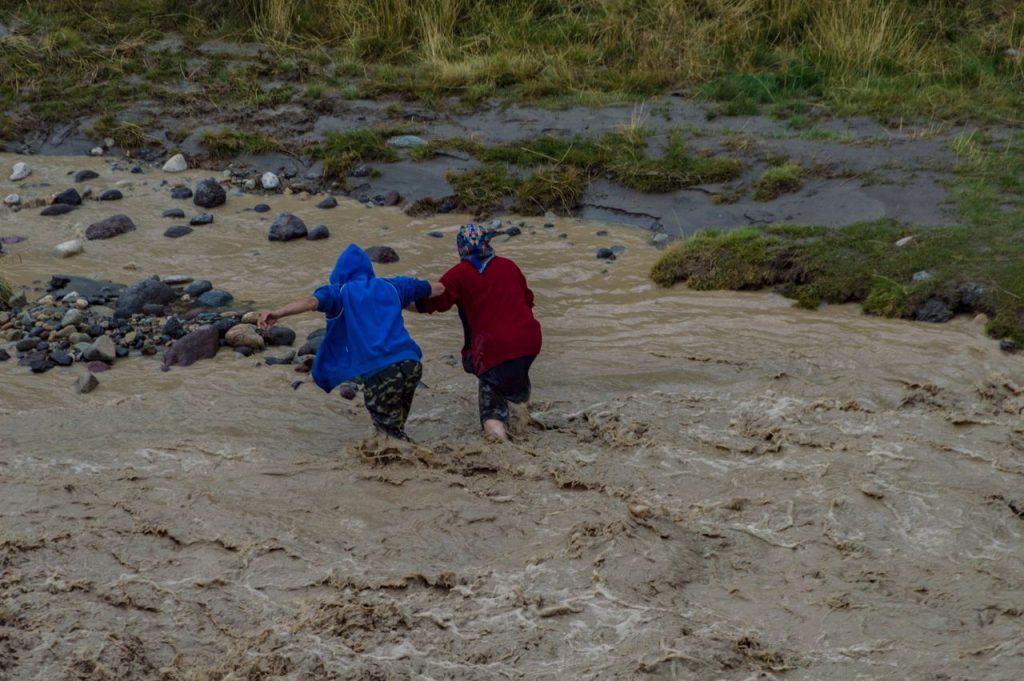
There is something deeply unfair about the climate crisis.
The people who consume the most energy may not be the ones running from floods.
The people who built industries powered by fossil fuels may not be the ones watching glaciers collapse above their villages.
The people living thousands of kilometres away from the Himalayas may never understand what it means to wake up and discover that a mountain, river or glacier has suddenly become a threat to your family.
Yet this is the brutal reality of climate change.
The smoke may rise in one part of the world, but the tears may fall somewhere else.
And Nepal is becoming one of the clearest examples of this injustice.
A Tiny Carbon Footprint. A Massive Climate Risk.
Nepal’s contribution to global carbon emissions is extremely small—well below 1% of the world’s total emissions. Its per-capita carbon emissions are also among the lowest compared with major high-emitting countries.
Compare that with countries where emissions per person are dramatically higher. Qatar, Kuwait and several Gulf nations have some of the highest per-capita emissions in the world. The United States also emits many times more carbon per person than Nepal.
Yet Nepal is the country sitting beneath one of the world’s most fragile mountain systems.
Its glaciers are melting.
Its glacial lakes are becoming more dangerous.
Its rivers can suddenly turn destructive.
Its villages, roads, bridges, farms and hydropower infrastructure are increasingly vulnerable.
And the people paying the price are not billionaires flying private jets.
They are often farmers, workers and families living in remote mountain communities.
That is why this is not merely an environmental crisis.
It is a crisis of justice.
Carbon Has No Passport
For decades, much of the world’s economic growth came with a heavy carbon price.
Factories expanded.
Cars multiplied.
Air travel exploded.
Energy consumption became a symbol of prosperity.
The atmosphere was treated like a free dumping ground.
But carbon dioxide does not stay where it is produced.
The atmosphere does not care about national borders.
A tonne of carbon emitted thousands of kilometres away can contribute to global warming that destabilises glaciers in the Himalayas.
And here is the most uncomfortable truth:
Climate change does not always send the consequences back to the people who created them.
Imagine wealthy people throwing waste into a river upstream while a poor community downstream is forced to live with the polluted water.
That is the climate crisis in its simplest form.
The person creating the problem and the person suffering from it may be completely different.
Nepal’s Mountains Are Paying for a World They Did Not Consume
To tourists, the Himalayas are breathtaking photographs and adventure destinations.
To Nepal, they are survival.
The mountains provide water, agriculture, livelihoods, electricity and tourism.
But rising temperatures are changing this fragile ecosystem.
Melting glaciers, unstable glacial lakes, intense rainfall, floods and landslides are becoming increasingly serious risks.
And when disaster strikes, poor countries face another problem that wealthy countries often do not.
A rich country can rebuild faster.
It can insure homes.
It can deploy expensive technology.
It can invest billions in stronger infrastructure.
But a poor farmer who loses one crop may lose an entire year’s income.
A remote village that loses a bridge can remain cut off.
A developing country may have to borrow money simply to rebuild what climate change destroyed.
Climate change does not affect everyone equally. It punishes the vulnerable more severely.
What About China and India?
China cannot be left out of this conversation.
No scientist can honestly claim that the emissions of one country alone melted a particular glacier. Climate change is the result of accumulated global emissions.
But China, as the world’s largest annual emitter of greenhouse gases, is undeniably part of the global warming equation.
For Nepal, another issue is equally important: cross-border cooperation. In the Himalayas, rivers, glaciers and weather systems do not stop at political borders. Nepal needs stronger cooperation with its neighbours, including better sharing of glacier, river and weather data and more effective early-warning systems.
India also has a complicated position.
India remains a developing country and its historical and per-capita emissions are far below those of many wealthy nations. But India is also one of the world’s largest total emitters today, which means its responsibility is growing as well.
India, China and other countries may provide assistance when disasters occur. But the bigger question is this:
Why should Nepal have to wait for international aid after the disaster?
What Nepal needs even more is investment before the next disaster.
Better science.
Better monitoring.
Early-warning systems.
Stronger infrastructure.
Climate adaptation.
And meaningful climate finance.
Climate Finance Is Not Charity
This is where the world needs to stop pretending.
When wealthy and high-emitting countries provide climate finance to vulnerable countries, it is often described as generosity.
But is it really charity?
If your actions contributed significantly to a problem and another person is forced to pay for the damage, helping repair that damage is not generosity.
It is responsibility.
Nepal should not have to beg for sympathy every time a flood destroys a community.
Countries that have benefited enormously from decades of carbon-intensive development must recognise that climate responsibility cannot end with speeches at international conferences.
The money required to protect vulnerable communities should not arrive only after people die.
Leadership is what happens before the flood. Everything after that is rescue.
Stop Celebrating “Resilience” While Ignoring Responsibility
There is another uncomfortable habit the world must stop.
Whenever poor communities survive disaster after disaster, we proudly say:
“They are resilient.”
Yes, they are.
But how many times should they have to prove it?
How many floods must a family survive before the world decides to prevent the next one?
How many bridges must collapse?
How many homes must be destroyed?
How many children must grow up afraid of the next monsoon?
Resilience is admirable. But forcing people to repeatedly become resilient is not justice.
The Real Invoice Has Arrived
The tragedy of Nepal should be a warning to the entire world.
For decades, humanity enjoyed the benefits of unlimited consumption without calculating the environmental bill.
Now the bill is arriving.
And too often, it is being delivered to the wrong address.
A Himalayan farmer did not create the world’s industrial emissions.
A mountain village did not create decades of luxury consumption.
A family living beside a river did not decide how the world’s biggest economies would power their growth.
Yet they may lose their home because of decisions made far away.
That is the cruelty of climate change.
The atmosphere does not check who is rich.
The glacier does not know who emitted the carbon.
The flood does not ask who created the pollution.
It simply comes.
And sometimes, the person standing in its path is the person who contributed the least.
Nepal’s people should not merely receive sympathy from the world.
They have the right to demand responsibility.
Because climate change is no longer only about the environment.
It is about fairness.
It is about accountability.
It is about whether the world believes that those who benefited most from the problem should also carry a greater share of the solution.
The Final Question
Perhaps the entire climate crisis can be reduced to one simple question:
Why should the people who polluted the least be forced to pay the highest price?
Until the world can answer that honestly—and act on it—the climate crisis will remain not just an environmental failure.
It will remain one of the greatest injustices humanity has ever created.
The smoke may rise in one country.
But the tears may fall in another.
And Nepal is reminding the world that the planet is finally sending us the invoice.
The only question is: who will pay the bill?