
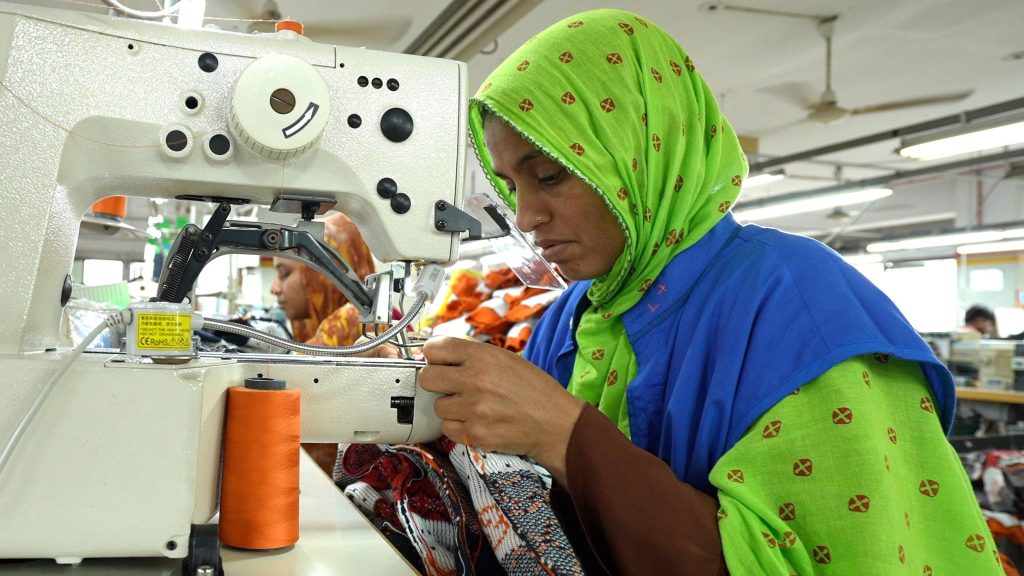
Bangladesh’s apparel exports to the United States did something surprising in 2025: they jumped 21.66% year-on-year in just the first seven months. In dollar terms, exports touched $4.98 billion, which is roughly ₹41,500 crore. That’s not a small bump—it’s a statement.
And here’s the twist: this growth happened right after the U.S. slapped tariffs of up to 50% on imported apparel and killed the famous $800 duty-free loophole that powered ultra-cheap Shein/Temu parcels. Tariffs were meant to slow down imports, but Bangladesh figured out how to ride the storm.
Why Bangladesh Grew When Tariffs Rose
- China’s decline, Bangladesh’s rise
As the U.S. pulled sourcing out of China, orders shifted to Bangladesh. Even with tariffs, Bangladesh remains cheaper on landed cost than most alternatives. Scale, skilled labor, and denim/knit dominance kept it ahead. - The death of de minimis
Earlier, more than a billion parcels a year slipped into the U.S. duty-free thanks to the $800 loophole. That door is now shut. Suddenly, big-box orders with compliance and labels are back in fashion—and Bangladesh is built exactly for that model. - Tariffs squeeze the very bottom
The lowest-priced, ultra-fast fashion items took the biggest hit. Retailers, unwilling to pass full costs to consumers, shifted to suppliers who can balance affordability with stability. Bangladesh fit the bill. - Consumers paying a little more, but steadier
The average unit price of Bangladesh exports rose 1.1%, while volume jumped over 20%. That means U.S. buyers are accepting slightly higher costs to secure reliable supply.
Shocking Revelations for Fast Fashion
- The “₹67,000 magic trick” ($800 duty-free loophole) is gone. Those ₹500 T-shirts delivered to your door in 5 days? Expect them to cost more.
- Tariff bands range from 15% to 50%. Bangladesh managed to grow even in this climate, while countries like India saw higher effective rates—around 50% in some cases.
- U.S. retail is quietly absorbing pain. Margins are thinner, assortments are tighter, and the “100 SKUs a week” madness is slowing down.
What This Means Going Forward
- For U.S. shoppers: Prices on the absolute cheapest fast fashion will climb. Expect fewer micro-drops and more consolidated buys.
- For brands: The sourcing map is redrawn. Bangladesh wins, but Mexico and CAFTA partners are rising too as nearshoring hedges.
- For Bangladesh: This is both a jackpot and a test. Compliance, labor audits, and full product traceability will decide who keeps the U.S. shelf space.
- For fast fashion itself: The loophole era is over. The next era is about efficient mass + verified supply chains—not endless cheap drops.
India’s Missed Bus
Here’s where the story hurts: India should have been in Bangladesh’s place. With its massive cotton base, diverse product clusters, and skilled artisans, India could have captured this redirected demand. Instead, we’re left watching from the sidelines because:
- Tariffs cut deeper: Indian exports faced some of the highest effective rates—up to 50%, making us less competitive than Bangladesh.
- Policy paralysis: While Bangladesh aggressively supports its apparel exporters with incentives, India still drowns in paperwork, slow ports, and GST complexity.
- Lack of collective branding: Bangladesh sells “Made in Bangladesh” as a reliable low-cost brand. India remains fragmented, with no single narrative to U.S. buyers.
- Traceability gap: Buyers want compliance, audits, and traceability. India’s handloom and textile clusters are still largely un-digitized, while Bangladesh’s factories, though not perfect, offer audit-ready mass production.
A Call to Action for Indian Policymakers
India cannot afford to miss this bus again. The U.S. market is still shifting, and opportunities remain—but only if action is swift and decisive. Policymakers must:
- Negotiate tariff relief or preferential trade access so Indian exporters are not priced out before the game even begins.
- Streamline logistics and compliance—fast-track ports, reduce paperwork, and simplify GST processes to match Bangladesh’s speed.
- Build a national textile identity: “Made in India” should stand for scale + compliance + sustainability, not just fragmented regional labels.
- Mandate digital traceability across cotton, weaving, and garmenting—through Digital Product Passports and blockchain-backed systems—to guarantee authenticity and attract global buyers who demand transparency.
- Incentivize scale without killing diversity: India must support both factory-scale exports and smaller clusters (handloom, khadi) that add value through heritage.
The Bottom Line
Tariffs were supposed to choke cheap imports. Instead, they re-wired the system. Bangladesh turned adversity into growth, bagging nearly ₹41,500 crore in just seven months. Fast fashion is not dead—but its “algorithm + loophole” model is.
For India, the writing is on the wall: if we don’t modernize our textile strategy now, we risk being reduced to a supporting act in the very industry we once led.
The question is simple—will policymakers wake up, or will India keep missing the bus while others drive it?