
“Most people think charity begins with generosity. In reality, it begins with accountability.”
Walk into any social gathering in India and ask a simple question:
“Why don’t more people start charities if they genuinely want to help others?”
The answers usually sound simple.
“Because they don’t have enough money.”
“Because they don’t have enough time.”
“Because the government makes it difficult.”
While all these answers contain some truth, none of them explain the real picture.
The biggest misconception about charity is that it begins with donations.
It doesn’t.
A genuine charitable institution begins long before the first rupee is donated. It begins with responsibility, transparency, legal compliance, governance, financial discipline, and an unwavering commitment to public trust.
Anyone can create a social media page asking people to contribute money. Anyone can print a banner, organize an event, or launch a crowdfunding campaign. But building an institution that the public, government, companies, auditors, and beneficiaries can trust is an entirely different challenge.
This is the hidden side of charity that very few people ever see.
Today, thousands of charitable organizations work across India in education, healthcare, rural development, environmental protection, disaster relief, animal welfare, women empowerment, skill development, tribal welfare, heritage preservation, and countless other causes. Yet very few people understand how these organizations actually come into existence or why some survive for decades while others disappear within a year.
This journal is not about asking for donations.
It is about understanding what it truly takes to build a public charitable institution in India.
Charity Is Easy. Building an Institution Is Not.
Helping someone in need is one of the oldest traditions of Indian civilization.
Our culture has always encouraged daan—the act of giving without expecting anything in return. Families donate food during festivals, support temples, sponsor education, contribute to hospitals, and help neighbours during difficult times.
These acts of kindness are beautiful.
But they are different from building a charitable institution.
An institution is expected to survive beyond the life of its founders. It must maintain records, follow laws, withstand audits, remain transparent, and continue serving society year after year.
That transformation—from a good intention to a lasting institution—is where the real work begins.
Understanding India’s Non-Profit Landscape
India broadly recognizes three common structures for non-profit organizations.
The first is a Public Charitable Trust, one of the oldest and most widely used models. It is particularly suitable for long-term charitable work and is governed by the applicable trust laws in the respective state along with other relevant laws.
The second is a Society, generally formed by a group of members working together for a common objective. It follows a more democratic structure with memberships, committees, meetings, and elections.
The third is a Section 8 Company, created under the Companies Act. It follows corporate-style governance with directors, board meetings, statutory filings, and extensive compliance requirements. Many large national organizations adopt this structure because of its formal governance framework.
None of these structures is universally better than the others.
Each serves a different purpose.
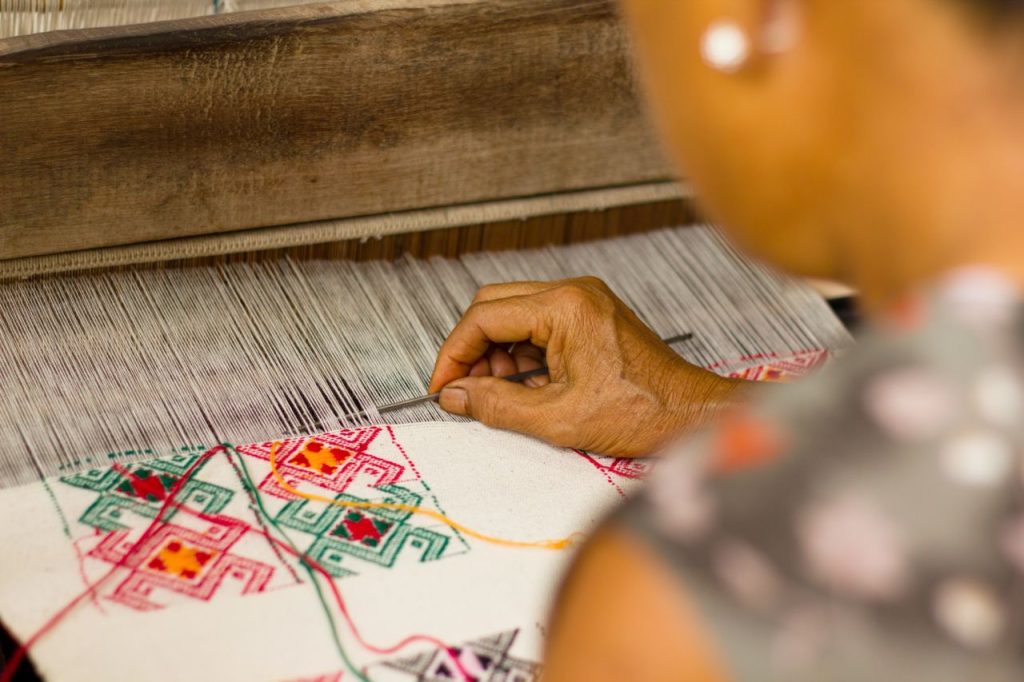
For Save Handloom Foundation, a registered Public Charitable Trust was the most appropriate choice because the objective was to create a long-term institution dedicated to preserving India’s handloom heritage, supporting artisans, and promoting sustainable livelihoods.
The Journey Begins Long Before Registration
Many people imagine registering a trust is similar to registering a business.
It isn’t.
The process begins with defining a genuine charitable objective.
Why does the organization exist?
Who will benefit?
How will it operate?
Who will manage it?
How will funds be utilized?
These questions are not mere formalities. They become the foundation of the institution itself.
A Trust Deed is then carefully prepared, laying down the objectives, governance framework, responsibilities of trustees, powers, procedures, and operational principles.
The trustees themselves carry enormous responsibility. They are custodians of public trust. Their role extends far beyond attending meetings or signing documents. Every financial decision, every project, and every donation must ultimately serve the charitable objectives of the trust.
Once the trust is legally registered, the journey has only just begun.
The organization must obtain a Permanent Account Number (PAN). Depending on operational requirements, it may also obtain a Tax Deduction and Collection Account Number (TAN). A dedicated bank account must be opened. Proper books of accounts need to be maintained. Every receipt and expenditure must be recorded. Audits, financial statements, statutory filings, and governance practices become part of regular operations.
This is why many first-time founders are surprised.
Starting the trust was the easy part.
Running it responsibly is the real challenge.
Compliance Is Not a Burden. It Is the Foundation of Trust.
One of the biggest misconceptions about NGOs is that compliance exists only because the government demands it.
In reality, compliance protects everyone.
It protects donors by ensuring funds are used responsibly.
It protects beneficiaries by ensuring projects are genuine.
It protects trustees by establishing clear governance.
It protects society by discouraging misuse of charitable status.
Good governance is not paperwork.
It is trust made visible.
Why Certifications Matter
Many people hear terms like 12A, 12AB, 80G, or CSR-1 without understanding what they actually mean.
These are not awards.
They are legal recognitions that indicate a charitable organization has fulfilled specific regulatory requirements.
12AB Registration
Earlier, charitable organizations commonly obtained registration under the 12A provisions of the Income-tax Act. Today, this framework has largely transitioned to 12AB Registration.
This registration primarily allows eligible charitable income of the organization to receive income-tax exemption, subject to compliance with the law.
For a genuine charitable institution, this recognition is extremely important because it supports the long-term financial sustainability of charitable activities.
80G Registration
Many people mistakenly believe 80G benefits the trust.
It doesn’t.
It primarily benefits the donor.
Eligible donations made to approved organizations may qualify for tax deductions under the Income-tax Act, subject to applicable rules.
This creates confidence among donors that they are supporting a recognized charitable institution while also receiving the tax benefits available under law.
For donors, it represents financial encouragement.
For charities, it represents credibility.
CSR-1 Registration
Perhaps one of the least understood yet most significant developments in India’s social sector is CSR-1 Registration.
India’s Corporate Social Responsibility framework has fundamentally changed how many companies contribute to society.
Large companies are increasingly expected to invest a portion of their eligible CSR expenditure in meaningful social development initiatives.
However, companies cannot simply distribute funds without accountability.
They need implementing agencies that satisfy prescribed legal requirements.
This is where CSR-1 becomes important.
It enables eligible organizations to participate in the corporate social responsibility ecosystem, opening opportunities to collaborate with responsible companies on projects that create measurable social impact.
For organizations working sincerely on long-term social causes, CSR funding can become a powerful catalyst.
It transforms isolated charitable activities into sustainable development programmes.
NGO DARPAN and Transparency
Another important milestone for many organizations is registration on NGO DARPAN.
Its purpose is straightforward.
To improve transparency.
To help government departments identify registered organizations.
To strengthen credibility within the broader nonprofit ecosystem.
Transparency is becoming one of the most valuable assets any charitable organization can possess.
Donations Are More Complex Than Most People Think
People often assume a trust can simply publish a bank account number and begin collecting donations.
The reality is far more structured.
There is a difference between:
- Domestic donations from individuals within India.
- Corporate CSR funding.
- Foreign contributions.
Domestic donations are governed by Indian laws applicable to charitable institutions.
Corporate funding follows CSR regulations and organizational eligibility.
Foreign contributions involve additional legal requirements under the Foreign Contribution (Regulation) Act (FCRA).
These distinctions exist because charitable institutions handle public money.
Accountability is not optional.
It is essential.
Why Many NGOs Never Survive
Every year, numerous organizations are established with great enthusiasm.
Many quietly disappear.
Not because the founders lacked compassion.
But because compassion alone cannot sustain an institution.
Some underestimate compliance.
Some struggle with financial management.
Some cannot maintain proper records.
Some fail to build governance systems.
Some never develop long-term funding strategies.
Others lose momentum after the initial excitement fades.
Running a charitable institution demands persistence.
Unlike a business, success cannot be measured only in revenue.
Unlike a government department, authority is limited.
Unlike a family, decisions affect public trust.
It requires patience unlike almost any other profession.
Our Journey: Save Handloom Foundation
Our own journey reflects these realities.
Save Handloom Foundation was established as a registered Public Charitable Trust in Karnataka with a clear purpose—to contribute toward the preservation, promotion, and sustainable future of India’s handloom ecosystem.
The objective was never merely to create another organization.
The objective was to build an institution capable of earning public confidence over time.
Obtaining registrations such as 12AB, 80G, and CSR-1 was not about collecting certificates for display.
Each represented another layer of responsibility.
Each required compliance.
Each demanded documentation.
Each strengthened accountability.
Together, they created a stronger foundation upon which future social initiatives could be built.
Alongside the trust, DesiFusions.com brand was created as an initiative focused on handmade products, demonstrating that sustainable livelihoods can be supported through responsible market access. DesiFusions.com hand made products can be purchased from Amazon.in. Instead of viewing artisans only as beneficiaries, the vision is to help create opportunities where craftsmanship is valued and income is generated with dignity.
The journey is still at an early stage.
Like every meaningful institution, it will be judged not by its intentions but by its impact over the years ahead.
The Future of CSR in India
India’s CSR framework represents one of the most significant developments in corporate philanthropy.
Instead of treating charity as an occasional donation, companies increasingly approach social investment with measurable objectives, governance, reporting, and long-term partnerships.
This creates new opportunities for genuine organizations.
But it also raises expectations.
Companies seek organizations that demonstrate integrity, financial discipline, measurable outcomes, and transparent governance.
Good intentions alone are no longer enough.
Professionalism has become essential.
Lessons for Anyone Who Wants to Start a Trust
If you dream of creating a charitable organization, begin with a purpose that is larger than yourself.
Understand the legal structure before choosing one.
Invest time in governance.
Maintain impeccable financial records.
Respect compliance.
Build transparency from the very first day.
Never assume that public trust is permanent.
It must be earned continuously.
Most importantly, remember that a charitable institution should never depend solely on the passion of one individual.
It should be capable of serving society long after its founders are gone.
That is the true measure of institution building.
A Final Thought
The easiest part of charity is giving.
The hardest part is becoming worthy of receiving.
Every donation represents someone’s earnings.
Someone’s sacrifice.
Someone’s faith.
When people contribute to a public charitable trust, they are not simply transferring money.
They are transferring trust.
That trust carries enormous responsibility.
It demands honesty when no one is watching.
It demands discipline when shortcuts seem easier.
It demands transparency even when mistakes occur.
Perhaps this is why building a genuine public charitable trust is so difficult.
And perhaps that is exactly why it matters.
In an age where confidence in institutions is constantly being tested, the organizations that survive will not necessarily be the ones with the biggest buildings or the loudest publicity.
They will be the ones that quietly demonstrate integrity, year after year, audit after audit, project after project, and life after life.
Because in the end, charity is not measured by the amount of money collected.
It is measured by the amount of trust that is earned.
And trust, once earned honestly, becomes the greatest contribution any charitable institution can ever make to society.