
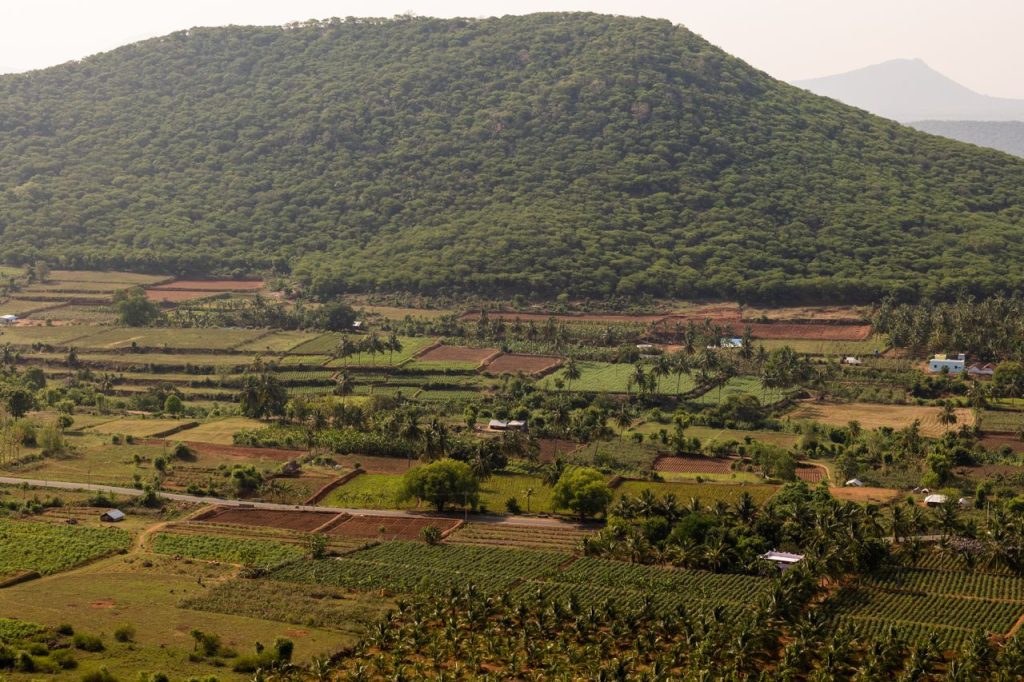
The proposed Google-linked AI data centre project in Visakhapatnam, Andhra Pradesh, brings this challenge into focus.
1. What is happening in Vizag?
Google announced a $15 billion investment in an AI hub in Visakhapatnam in October 2025, with development planned over five years. The project involves partnerships with AdaniConneX and Airtel.
In February 2026, the Andhra Pradesh government approved approximately 601.4 acres across three locations for the broader data centre initiative. Construction preparation has involved visible tree clearing and hillside levelling, prompting environmental concerns.
However, an important distinction must be made: 601.4 acres refers to the land allocated across three sites, not a verified measurement of forest destroyed. Questions about forest classification, tree-felling permissions and environmental safeguards require transparent investigation.
2. When forests become construction sites
Forests are essential ecosystems. They absorb carbon, regulate local temperatures, protect soil, support wildlife and contribute to the natural water cycle.
Clearing vegetation and reshaping hillsides can increase soil erosion, disturb habitats and change rainwater flows. The impact depends on the ecosystem, the extent of clearing and the effectiveness of mitigation measures.
The Vizag project has faced concerns about its proximity to Kambalakonda Wildlife Sanctuary and nearby forest areas. Independent ecological assessments, accurate land-use maps and continuous environmental monitoring are essential to determine the actual impact.
3. Can AI compete with local water needs?
Data centres generate considerable heat and require cooling systems to maintain reliable operations. Depending on the technology used, these systems can consume significant amounts of water.
Reuters reported in August 2026 that Visakhapatnam’s stated daily water supply was approximately 410 million litres, against demand of 480 million litres. Activists have questioned whether additional industrial demand could worsen local shortages.
The government has disputed allegations that residential and rural water supplies will be diverted to the project. Google has also indicated plans to use advanced air-cooling technology.
These assurances should be assessed through independently verified water budgets, cooling-system specifications and seasonal demand projections.
Communities must not have to compete with industrial infrastructure for essential drinking water.
4. The electricity footprint of AI
Large AI data centres require enormous computing power and dependable electricity supplies. The environmental impact depends partly on how that electricity is generated.
If additional demand is met predominantly through fossil fuels, greenhouse-gas emissions can increase. Renewable energy, efficient computing and energy storage can help reduce these impacts.
Environmental approvals reportedly disclosed a potential capacity of 2.51 GW for the Vizag project, compared with its publicly announced 1 GW scale. This makes transparent reporting of actual electricity demand, renewable-energy sourcing and emissions particularly important.
5. Economic development must protect local communities
Large infrastructure projects can bring investment, employment and improved connectivity. These benefits matter, but they must be balanced against the costs borne by local communities.
Farmers and residents affected by land acquisition deserve lawful compensation, transparent processes and meaningful opportunities to raise concerns. Assessments should examine employment quality, local hiring, impacts on livelihoods and pressure on public infrastructure.
Development should improve the lives of existing communities rather than treating their land and natural resources merely as inputs for global businesses.
6. Environmental accountability cannot stop at approvals
As of 19 October 2026, legal challenges concerning the project’s environmental clearance remain active. On 16 October, the National Green Tribunal sought the Central government’s response to a petition raising concerns about water resources, wildlife and the adequacy of environmental assessment.
These are matters under examination, not a final judicial finding that the project is illegal.
The public deserves access to relevant environmental assessments, land classifications, tree-felling permissions, water-use plans and independent compliance reports. Where additional legal approvals are required, they must be obtained before the relevant activities proceed.
7. What responsible AI infrastructure should look like
India does not have to choose between technological progress and environmental protection. Responsible development should include:
- Protecting ecosystems: Avoid sensitive habitats and minimise unnecessary tree clearing.
- Securing water supplies: Use efficient cooling and independently audited water budgets.
- Reducing emissions: Expand credible renewable-energy sourcing and improve computing efficiency.
- Protecting biodiversity: Conduct independent ecological assessments and monitor wildlife impacts.
- Respecting communities: Ensure fair compensation, public participation and accessible grievance mechanisms.
- Publishing results: Disclose measurable environmental performance and commission independent audits.
These principles should apply to all major data centre projects, regardless of the company involved.
Conclusion: Progress must protect nature
The Google-linked data centre project in Vizag represents a broader challenge for India’s AI ambitions. The country needs investment, innovation and employment, but it also needs forests, reliable water supplies, clean energy and healthy ecosystems.
The viral claim that 600 acres of forest are being cleared requires more precise wording. The figure refers to land allocated across three sites, not a verified total of forest destroyed. Nevertheless, the reported tree clearing and ongoing environmental challenges deserve serious scrutiny.
At Save Handloom Foundation, we believe sustainability means looking beyond immediate convenience and economic returns to understand the impact of our choices on people and nature. Just as responsible clothing production must consider resources, pollution and livelihoods, digital infrastructure must account for its environmental footprint.
A genuinely intelligent future is one in which technological ambition and environmental responsibility advance together.
What can readers do?
- Share verified information rather than sensational headlines.
- Follow environmental proceedings and official findings.
- Demand transparent land-use, water and energy disclosures.
- Support credible environmental conservation and community-rights initiatives.
- Adopt sustainable everyday practices and demand accountability from large institutions.
Progress should be measured not only by what we build, but also by what we protect.
Published by Save Handloom Foundation | Towards a more sustainable and responsible future.