
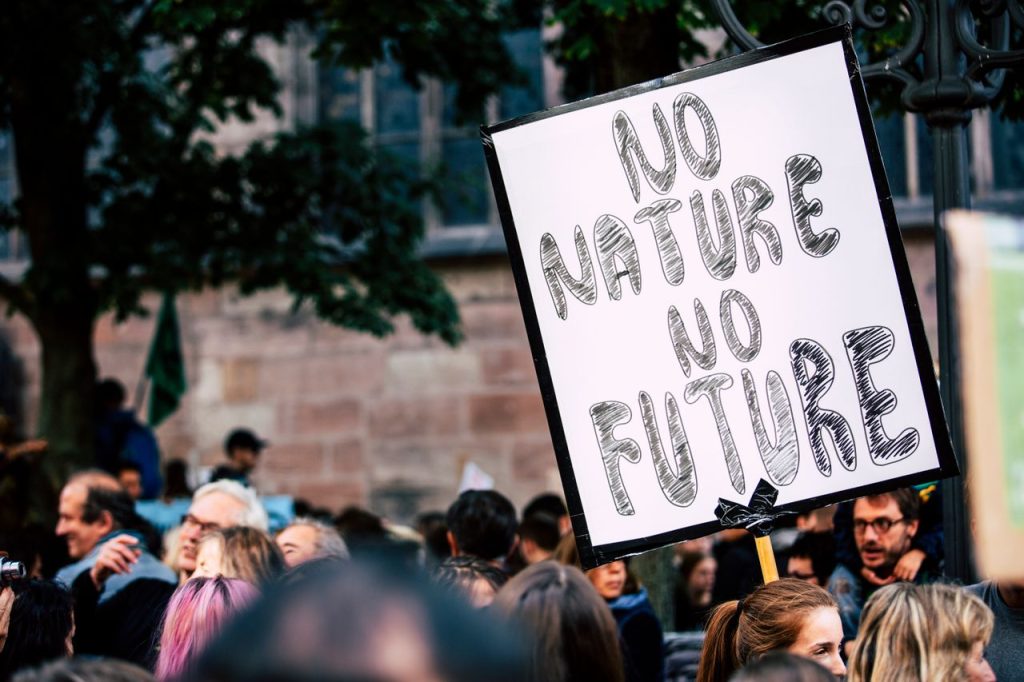
Every day, we are told that the future belongs to technology.
Artificial Intelligence is writing code, diagnosing diseases, creating art, and transforming businesses.
Electric vehicles are replacing petrol-powered cars.
Hydrogen is being hailed as the fuel that could power the next industrial revolution.
Humans are planning missions to Mars, building quantum computers, and dreaming of a world where machines become smarter than ever before.
These are remarkable achievements.
They represent the best of human innovation.
But there is one uncomfortable question that hardly anyone is asking.
What is the point of building the future if we fail to protect the planet that makes that future possible?
Technology is not our enemy.
Nature is not our enemy either.
The real danger is believing that technology alone can save us while we continue to neglect the Earth.
Look around.
The warning signs are no longer hidden.
They are happening around us every single year.
Take India as an example.
In many cities, just one hour of heavy rain is enough to bring everything to a standstill.
Roads disappear beneath floodwater.
Vehicles remain stranded.
Homes are flooded.
Businesses close.
Schools suspend classes.
Hospitals struggle to function.
Traffic comes to a complete halt.
Entire cities stop working because there is simply nowhere for the rainwater to flow.
The irony is heartbreaking.
The same cities that struggle with floods during the monsoon begin facing severe water shortages only a few months later.
How can a place have too much water and too little water within the same year?
The answer lies in the choices we have made.
Lakes have disappeared beneath apartment complexes.
Wetlands have become commercial buildings.
Natural drainage channels have been blocked.
Forests have been cut down.
Open land has been covered with concrete.
When rain falls, the earth can no longer absorb it.
Instead, the water rushes through streets, flooding everything in its path before disappearing into the sea.
Then summer arrives.
Temperatures touching 42°C are becoming increasingly common across many parts of India.
Heatwaves last longer.
Reservoirs shrink.
Groundwater levels continue to fall.
Farmers struggle to grow crops.
Cities consume more electricity simply to keep people cool.
What was once considered an extreme weather event is slowly becoming normal.
And this is only part of the story.
Across the world, nature continues to remind humanity who is truly in control.
Landslides bury villages within minutes.
Wildfires consume forests that took centuries to grow.
Hurricanes destroy entire coastlines.
Earthquakes reduce cities to rubble without warning.
Cyclones leave millions without homes.
Cloudbursts wash away roads, bridges, and communities overnight.
Glaciers continue to melt.
Sea levels continue to rise.
Nature does not care about borders, wealth, politics, religion, or technology.
It follows its own laws.
In just a few seconds, an earthquake can destroy what humanity spent decades building.
A cyclone can erase years of development overnight.
A wildfire can consume thousands of hectares before anyone can stop it.
No artificial intelligence can negotiate with an earthquake.
No electric vehicle can stop a cyclone.
No hydrogen-powered engine can prevent a landslide.
Technology can help us respond better.
But it cannot replace our responsibility to protect the environment.
As if natural challenges were not enough, humanity continues to create new crises.
Wars continue to reshape the world.
Entire cities are reduced to rubble.
Water pipelines are destroyed.
Power stations are bombed.
Hospitals become battlefields.
Schools become shelters.
Millions of people are forced to leave their homes and become refugees.
Trade routes become dangerous.
Shipping lanes are disrupted.
Food supplies become uncertain.
Global prices rise.
The consequences of war are never limited to the countries involved.
Every conflict creates ripple effects across the entire world.
For more than a century, many global conflicts have revolved around oil.
Oil shaped economies.
Oil shaped alliances.
Oil shaped foreign policies.
Oil shaped wars.
But the next great conflict may not be about oil.
It may be about water.
Fresh water is one of the most precious resources on Earth.
Although our planet appears blue from space, only a tiny fraction of Earth’s water is available as usable freshwater.
Population continues to grow.
Climate patterns continue to change.
Groundwater continues to decline.
Rivers continue to be polluted.
Lakes continue to disappear.
Demand continues to increase while supply becomes more uncertain.
Many of the world’s greatest rivers flow across national borders.
When one country stores or diverts water, another country downstream may suffer.
As freshwater becomes increasingly valuable, disputes over water are likely to become more common.
History has already witnessed conflicts over rivers.
The future may witness even more.
Imagine cities where clean drinking water is rationed.
Imagine farmers unable to irrigate their fields.
Imagine industries shutting down because water is unavailable.
Imagine families migrating not because they seek better jobs, but because their hometowns no longer have enough water to survive.
For millions of people around the world, this is no longer imagination.
It is already becoming reality.
Perhaps the greatest irony of our time is this.
Humanity is investing enormous amounts of money to explore other planets while struggling to protect the rivers, forests, wetlands, and ecosystems of the only planet known to support life.
We celebrate every new technological breakthrough.
Yet we continue losing groundwater.
We build smarter machines.
Yet we often make poorer environmental decisions.
Artificial Intelligence will undoubtedly transform the way we live and work.
Electric vehicles will help reduce dependence on fossil fuels.
Hydrogen may become one of the cleanest energy sources available.
These innovations are necessary.
They deserve celebration.
But none of them can replace a river.
None of them can create rain.
None of them can rebuild a destroyed ecosystem overnight.
None of them can produce healthy soil after decades of neglect.
None of them can replace clean drinking water.
The future will not belong only to the countries with the fastest computers or the smartest AI.
It will belong to those that protect their forests.
Those that restore their rivers.
Those that preserve their wetlands.
Those that harvest rainwater.
Those that build resilient cities instead of merely larger cities.
Those that understand that economic growth and environmental protection must go hand in hand.
Saving the Earth is no longer an environmental movement.
It is an economic necessity.
It is a national security priority.
It is a public health responsibility.
Above all, it is about survival.
Every tree we plant today is an investment in tomorrow.
Every lake we restore becomes insurance against drought.
Every river we clean becomes hope for future generations.
Every piece of land we protect strengthens the resilience of our communities.
The question is no longer whether climate change, water scarcity, and natural disasters will affect us.
They already are.
The only question is whether we will act while we still have time.
Because history may remember this generation not for creating Artificial Intelligence, electric vehicles, or hydrogen-powered transportation.
History may remember us for something far simpler.
We knew the warning signs.
We had the science.
We had the technology.
We had the resources.
The only thing left to decide was whether we had the wisdom to save the only home we have.
Artificial Intelligence may shape humanity’s future. But water, climate, and nature will decide whether that future is even possible.