Every few months, a news report says handloom weaving is disappearing. The usual explanation is that young people don’t want handmade cloth anymore, that power looms are faster, that machines have won. This explanation is comfortable. It is also wrong.
Handloom is not dying from lack of demand. It is dying from two failures that have nothing to do with the weaver’s skill or the buyer’s taste. One is how it is priced. The other is how it is sold. Both are shocking once you see the numbers.
Reveal One: The Weaver Gets Paid Like a Machine, Not Like a Craftsman
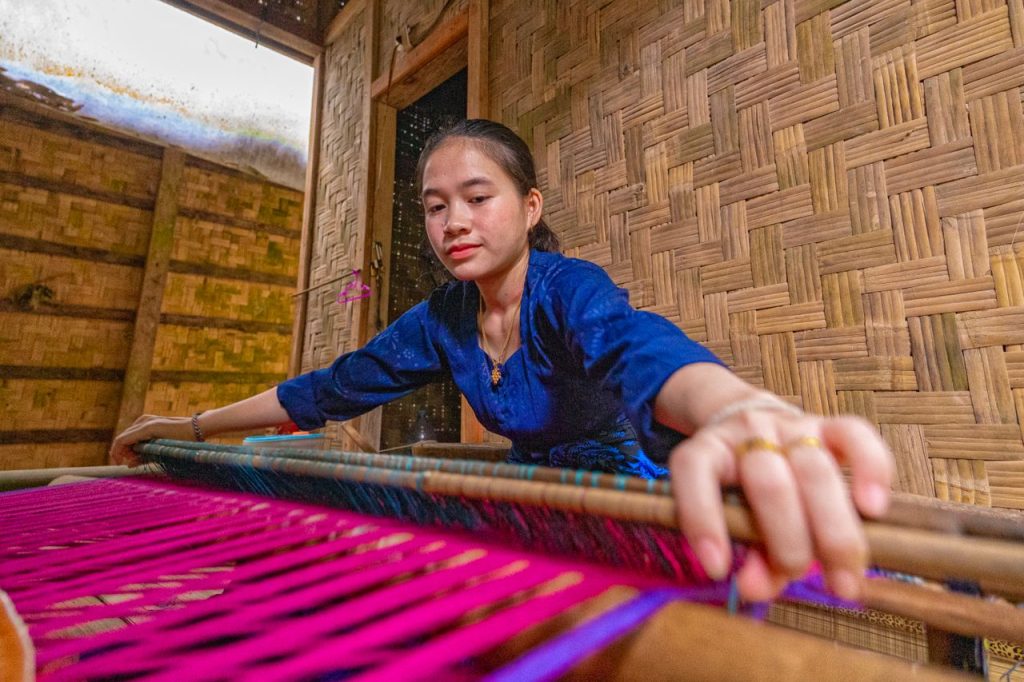
A handloom sari can take three to seven days of full, physical labour to weave. A power loom produces a similar-looking sari in under three hours. Yet in most rural markets, the handloom weaver is paid a wage barely higher than the power loom operator, sometimes lower, because the middleman who buys the cloth prices it by comparing it to the machine-made version sitting next to it in the same shop.
This is the part that shocks people the most. The system does not price handloom cloth by the days of skilled labour that went into it. It prices it by what a machine-made lookalike sells for, then adds a small “handmade” premium on top, often 10 to 20 percent. A week of a master weaver’s work ends up worth barely more than three hours of a machine’s output.
The weaver, doing the math every season, sees one outcome clearly: his son can earn more in a single day as a daily wage labourer on a construction site than he earns in a week at the loom he inherited from his father. So the son leaves. Not because he does not value the craft. Because the price system told him, very clearly, that the craft does not value him.
This is not a demand problem. Customers who buy an authentic handloom sari for fifteen thousand rupees do exist, and there are plenty of them. The problem is that the money almost never reaches the weaver in a form that reflects the actual labour. It gets absorbed by three or four layers of middlemen between the loom and the shop.
Reveal Two: Handloom Is Sold as Guilt, Not as Desire
The second failure is in the selling. Walk into most handloom emporiums, government or private, and the pitch is almost always the same: “buy this to support poor weavers,” “help preserve our heritage,” “this family has no other income.” This is selling through sympathy.
Sympathy is a weak and short-lived reason to buy anything. It works for one purchase, maybe twice. It never builds the kind of repeat demand that a fashion brand builds by making people simply want to wear the product. Nobody buys a second pair of sneakers out of pity for the factory worker. They buy it because they want it.
Handloom textiles are, on pure craftsmanship, some of the finest fabric in the world; the weave density, the natural dyes, the durability across decades, all genuinely superior to most machine-made cloth. Yet almost no one markets it that way. Instead of competing on desirability, the industry has boxed itself into competing on charity, which is a market that shrinks the moment the customer’s mood changes.
The result is a slow, painful contradiction: a product good enough to be sold as luxury is instead sold as a favour.
What This Actually Means
Fix the pricing so the weaver’s day of skilled labour is paid like skilled labour, not like a comparison to a machine. Fix the selling so the sari is marketed on its weave, its dye, and its durability, the same way a fine wool coat or a hand-stitched leather bag is marketed, not on pity. Do both, and there is no shortage of buyers waiting. There never was.
This is the exact gap the Save Handloom Foundation was built to close: paying weavers on the true value of their skill, not a fraction of a machine’s price, and presenting their work as something people want, not something people owe.
Handloom was never dying from lack of love. It was dying from a broken price tag and a broken pitch. Fix those two things, and the loom starts turning again, not out of nostalgia, but out of genuine demand.